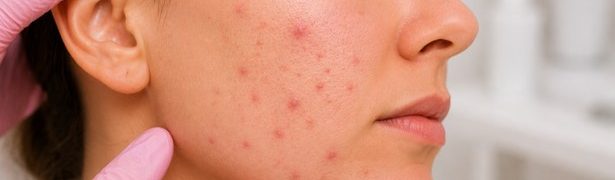
Care for acne-prone skin
Acne is not just a teenage problem. We will help you establish a suitable home skincare routine and complement it with gentle treatments such as chemical peels or deep cleansing – always following a consultation with a dermatologist.
Who is the treatment suitable for?
This care is intended for teenagers and adults, women and men alike, who struggle with spots, blackheads, clogged pores, oily skin or recurring acne. It is also suitable for those who wish to reduce the marks left by healed inflammation, such as post-acne marks. At the initial consultation, the dermatologist assesses the type and severity of your acne and recommends a suitable approach. For more severe or inflammatory forms, they may also suggest medical treatment or laser treatments.
What is acne?
Acne is a common condition affecting the sebaceous glands and hair follicles. It results from a combination of increased sebum production, pores clogged by dead skin cells, bacterial overgrowth and inflammation. It manifests as blackheads, spots and, in more severe cases, painful inflamed lesions. Hormones, genetic predisposition, stress and unsuitable cosmetics all contribute to its development. As acne takes different forms, it is important for a doctor to assess it and for care to be tailored individually.
What does it address?
- Clogged pores
- Blackheads and spots
- Oily skin
- Post-acne marks
- Unsuitable home care
How acne skin care works
The foundation is a well-designed home routine – gentle cleansing, suitable active ingredients and light hydration that do not clog pores. As part of the Personalised Skincare consultation, the dermatologist will recommend specific products and explain how to use them. Home care can be complemented by in-clinic treatments: a chemical peel helps to unclog pores and refine skin texture, while an aqua peel gently deep-cleanses the skin. For acne-prone skin, tretinoin at a concentration determined by the doctor may also be used as part of professional care.
If the acne is more severe or inflammatory, or leaves scars, the doctor may recommend laser acne treatment or scar treatment. Caring for acne-prone skin requires patience – improvement does not usually come immediately, but gradually over several weeks of regular care. It is important not to squeeze spots and not to keep changing products, as this can irritate the skin unnecessarily.
Course of the treatment
At the initial consultation, the dermatologist evaluates the condition of your skin, the type of acne and your current skincare, and asks about any medication you are taking. They then recommend a home routine and, if needed, propose a series of in-clinic treatments, such as chemical peels, with the number of sessions and intervals determined individually. Both peels and deep cleansing are outpatient treatments, after which you can return to your normal activities. At a follow-up visit, your skin’s response is assessed and the care adjusted if necessary.
Aftercare
After a chemical peel, temporary redness and light flaking may occur, which usually subside within a few days. Protect your skin consistently from the sun with products containing a UV filter, especially when using acids or tretinoin. Use gentle non-comedogenic products and avoid irritating your skin unnecessarily by scrubbing or squeezing. If your condition worsens or more significant irritation appears, please contact the clinic.
Benefits of the treatment
- Care led by a dermatologist experienced in treating acne
- A tailor-made home routine
- Gentle in-clinic treatments as a complement
- Continuity with laser acne treatment
FAQ
Is this care suitable for adults too?
Yes. Acne often appears in adulthood as well, for example in connection with hormones or stress. We always adapt the care to your age, skin type and the severity of your acne.
How does it differ from laser acne treatment?
Acne skin care is based on the right home routine and gentle in-clinic treatments such as peels or deep cleansing. Laser treatment is particularly suitable for more severe or inflammatory forms and for scars; the doctor will decide on the appropriate method.
When will I see an improvement?
Improvement usually comes gradually over several weeks of regular care. Patience and careful adherence to the doctor’s recommendations are important.
Can I squeeze my spots?
We do not recommend it. Squeezing can worsen inflammation, spread bacteria to the surrounding skin and increase the risk of marks and scars.
How do I get started?
Book a consultation with a dermatologist, who will assess the condition of your skin and suggest home care as well as any treatments.
ASK OUR ADVICE
Not sure which treatment is right for you?
We will be happy to help you choose and recommend the most suitable solution for your needs.
laserplastic@laserplastic.cz 724 860 082