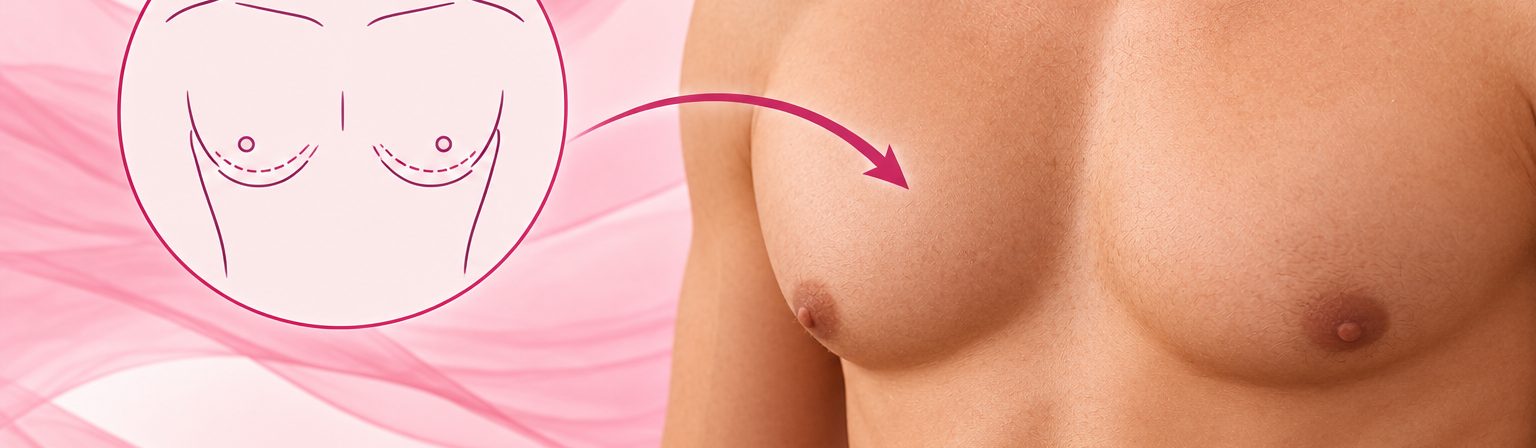
Male breast reduction
Gynaecomastia is an enlargement of the breast gland in men, which may affect one or both breasts. Surgical treatment involves removing the excess glandular tissue to adjust the volume and contours of the male chest.
Who is the procedure suitable for?
Gynaecomastia surgery is suitable for men whose breast gland has enlarged and this condition persists or causes aesthetic or physical problems. The enlargement may be related to hormonal changes, the use of certain medications or other health factors. The procedure may also be suitable for one-sided breast enlargement or marked chest asymmetry. Before surgery, it is important to investigate the cause of the breast gland enlargement and assess whether a surgical solution is appropriate.
Gynaecomastia or liposuction?
Enlargement of the male breasts may be caused by excess fatty tissue or by enlargement of the breast gland. If fatty tissue predominates, breast volume can be reduced by liposuction, in which the fat is suctioned out through a fine cannula. In the case of an enlarged breast gland, the glandular tissue, and possibly excess skin, is surgically removed. The choice of a suitable procedure depends on the cause of the breast enlargement and the individual findings.
What does it address?
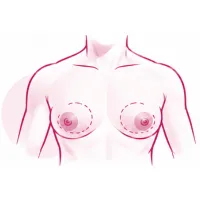 Enlarged breast gland
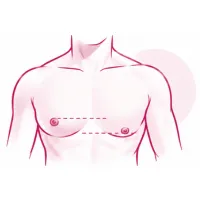 Male breast asymmetry
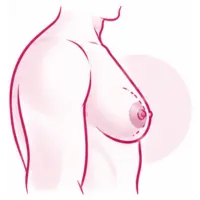 Excess glandular tissue
The procedure
Gynaecomastia surgery involves the surgical removal of excess breast gland tissue. The plastic surgeon usually makes the incision along the edge of the areola so that the resulting scar is as inconspicuous as possible. The enlarged glandular tissue is then removed and, depending on the extent of the findings, excess skin may also be corrected.
The extent of the operation and the placement of the incision depend on the size of the breast gland and the client's anatomy. Depending on its complexity, the procedure can be performed under local or general anaesthesia.
Price list
| Type of procedure | Price |
|---|---|
| Male Breast Reduction – Gynaecomastia | from 45 000 CZK |
Post-operative care
After gynaecomastia surgery, swelling, bruising, increased sensitivity or a feeling of tightness in the chest area may occur. Post-operative care usually involves wearing compression garments, which support the operated area during healing.
In the first few weeks, it is important to limit physical exertion, heavy lifting and sports that strain the chest area. The return to your normal routine depends on the extent of the operation and how your healing progresses. Follow-up check-ups and following your plastic surgeon's recommendations are also an important part of recovery.
Benefits of the procedure
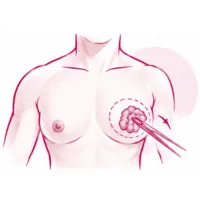 Targeted removal of excess glandular tissue.
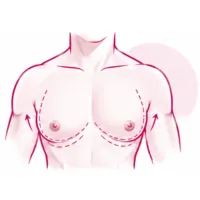 Chest contouring without breast implants.
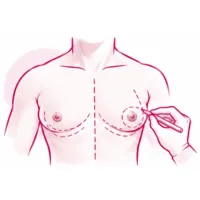 Surgical technique tailored to the extent of the gynaecomastia.
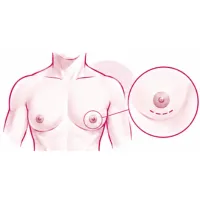 Incision placed to keep the scar inconspicuous.
FAQ
What is the difference between gland removal and liposuction?
Surgery removes enlarged glandular tissue and, where necessary, skin. Liposuction only suctions out fat and leaves the gland in place – it is less invasive and suitable if fatty tissue predominates.
How long does the procedure take?
Surgical removal of an enlarged breast gland usually takes 45–60 minutes, generally under general anaesthesia with a short hospital stay.
Will there be a visible scar?
The incision is usually made along the lower or outer edge of the areola so that the scar is as inconspicuous as possible.
How long is the recovery?
Usually 7–14 days. An elastic compression bandage is worn during this time.
How much does male breast reduction cost?
Prices start at CZK 45,000. The final amount depends on the extent and technique and will be determined by the doctor at the consultation.
ASK OUR ADVICE
Not sure which treatment is right for you?
We will be happy to help you choose and recommend the most suitable solution for your needs.
laserplastic@laserplastic.cz 724 860 082