Chemical peel
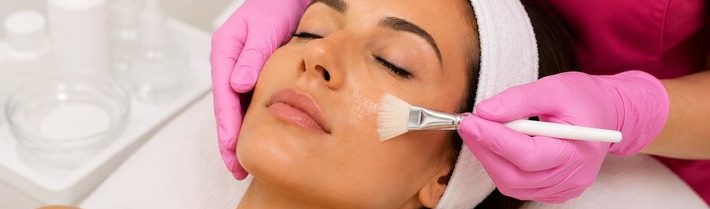
A non-invasive treatment in which selected acids gently remove dead cells from the surface of the skin and support its natural renewal. It helps to refine texture, even out tone and improve the overall appearance of the skin.
Who is the treatment suitable for?
A chemical peel is suitable for women and men who want to improve the appearance and quality of their skin. It can help with fine lines, signs of sun damage, pigmentation spots, enlarged pores, minor scars or uneven tone, as well as with acne-prone or oily skin. The face, neck, décolletage, backs of the hands and the back can be treated. The type and depth of the peel are chosen by the doctor at the consultation according to the condition of your skin and your expectations; a peel is not, however, a substitute for surgical procedures.
Types of chemical peel
Peels are distinguished by the depth at which they act. A superficial peel is the gentlest and focuses on texture and the overall appearance of the skin. A medium-depth peel is chosen for more pronounced signs of ageing or fine scars. A deep peel is intended for more significant imperfections, such as deeper scars or pigmentation spots. The depth of action depends on the type of acid, its concentration and how long it remains in contact with the skin – which is why the choice is always made by the doctor.
What does it address?
- Fine wrinkles
 Pigmented spots
- Enlarged pores
- Minor scars
- Acne-prone skin
How a chemical peel works
An acid solution is applied to cleansed skin, loosening and removing the top layer of dead cells in a controlled way. The skin responds to this stimulus with accelerated renewal, which can leave it looking smoother, fresher and more even. We use glycolic acid in concentrations of 15, 40 and 70%, Jessner's solution combining resorcinol, lactic acid and salicylic acid, TCA peels in various concentrations and, as part of specialist care for acne-prone skin, tretinoin in a concentration determined by the doctor.
GLYCOLIC ACID 15%, 40% AND 70%
The depth of action is determined by the concentration and contact time. A course of 4–6 treatments is usually recommended depending on the condition of the skin, and the treatment can be combined with other methods.
Jessner's solution is chosen for a more intensive peel; afterwards, redness, peeling or mild swelling may appear for several days. TCA peels in lower concentrations help to remove dead cells, while higher concentrations target more pronounced imperfections and the result develops gradually over days to weeks. Tretinoin may cause temporary irritation or peeling, which is why sun protection is important during the course.
Price list
| Procedure | Price |
|---|---|
| Chemical peel | from 1 200 CZK |
Course of the treatment
The treatment is preceded by a consultation at which the doctor assesses your skin and chooses the type of acid and its concentration. The skin is first thoroughly cleansed and degreased. The solution is then applied evenly to the treated area and left to act for several minutes – during this time you may feel a mild burning or stinging sensation. With glycolic acid, the peel is then neutralised and removed. The treatment itself is quick and you can go home afterwards.
Aftercare
After the peel, temporary redness and small crusts may appear; gentle peeling of the skin usually lasts approximately 5–14 days. With medium-depth and deep peels, irritation or pigmentation changes are possible, so it is important to follow the doctor's instructions carefully. Limit your time in the sun and use creams with a high SPF. The doctor will recommend soothing and regenerating products suitable for the treated skin. Do not forcibly remove peeling skin.
Benefits of the treatment
 A non-invasive treatment with no surgery
- Type and depth of peel tailored to you
- The face, neck, décolletage, hands and back can be treated
- Can be combined with other methods
FAQ
Is a chemical peel painful?
While the acid is acting, you may feel a mild burning or stinging sensation, which subsides once the solution has been neutralised and removed. The intensity of the sensation depends on the type and concentration of the peel.
How many treatments are needed?
For a glycolic acid peel, a course of 4–6 treatments is usually recommended, depending on the condition of the skin. The exact plan is determined by the doctor.
How long does the skin peel after a chemical peel?
Gentle peeling usually lasts approximately 5–14 days. Temporary redness or small crusts may also appear.
What should I be careful about after a peel?
The most important thing is sun protection – limit your time in direct sunlight and use creams with a high SPF. Care for your skin with soothing products recommended by the doctor.
When will I see the result?
The result becomes visible gradually, with a TCA peel over several days to weeks. The final effect depends on the condition of the skin and the type of peel chosen.
ASK OUR ADVICE
Not sure which treatment is right for you?
We will be happy to help you choose and recommend the most suitable solution for your needs.
laserplastic@laserplastic.cz 724 860 082